

The H1 General Paper examination was a little over a month ago. To satisfy your curiosity, here is the list of GCE A-Level 2025 Essay Questions for the new syllabus (8881/01):
- ‘No country should sacrifice its economic development in favour of preserving the environment.’ Discuss.
- Assess the view that only well-known works of art can be considered great.
- ‘The most important aim of a scientist is to satisfy human curiosity about the world.’ Evaluate this view.
- How far do you agree that media coverage of celebrities has a positive influence on young people in your society?
- ‘Democracy is the perfect form of government.’ Discuss.
- Evaluate the claim that it is the responsibility of wealthier countries to assist in dealing with natural disasters.
- ‘Learning facts is no longer necessary because information can be instantly accessed online’. Evalute this statement.
- To what extent do you agree that enough is done in your society to encourage a healthy lifestyle?
—
Here are some general observations:
—
1. Familiar essay topics, with an added twist
- Students need to be calm and discerning when choosing the RIGHT question instead of panicking when they see unfamiliar keywords.
- Students should present key arguments of these common topics but provide additional insight or nuance when tackling keywords such as ‘sacrifice’ (Question 1) and ‘most important aim’ (Question 3) and ‘responsibility’ (Question 6).
- Some questions deliberately adopt controversial stances, prompting students to challenge them or agree only with clear qualifications. Notable examples include:
- (Question 3) ‘important aim of a scientist is to satisfy human curiosity’ – This is a controversial proposition because while curiosity is undeniably central to scientific inquiry, it is rarely the sole or ultimate aim of science. Curiosity often functions as a springboard for discovery, motivating scientists to explore the unknown. In some cases, such curiosity-driven research results in breakthroughs that benefit humanity as an unintended byproduct. However, from a pragmatic standpoint, much of modern scientific research is purpose-driven, with clear objectives such as improving quality of life, solving real-world problems, or advancing technological capability. Consequently, while satisfying human curiosity may initiate scientific exploration, it is reductive to regard it as the primary aim of science, especially in an era where research is increasingly shaped by societal needs, funding priorities, and ethical considerations.
- (Question 7) ‘learning facts’ and ‘information’ is not the same thing – This claim is logically flawed, as “facts” and “information” are not synonymous. While the internet has undeniably enhanced access to vast amounts of information, not all information is factual, reliable, or unbiased. Much online content may be misleading, selectively presented, or driven by ulterior motives such as commercial or political interests. Students must therefore recognise that access to information does not equate to meaningful learning. Formal education remains essential in cultivating critical thinking skills, enabling individuals to evaluate sources, verify claims, and distinguish fact from opinion. Hence, while the internet is a powerful informational tool, it cannot fully replace structured education in fostering genuine understanding.
- (Question 5) ‘perfect form of government is democracy’ – The use of the word “perfect” renders this claim inherently problematic, as no political system is without flaws. Moreover, democracy itself exists in multiple forms and degrees in real-world contexts, ranging from liberal democracies to flawed or hybrid systems. While democracies generally perform better in the modern world and are often associated with greater prosperity, stability, and individual freedoms, it is overly simplistic to assume that democracy is universally ideal. Indeed, some flawed democracies continue to function effectively within specific social and cultural contexts, as seen in countries such as Singapore. Therefore, although democracy may be widely popular and comparatively successful, to label it as “perfect” is myopic and ignores the complexities and trade-offs inherent in governance.
—
2. There are more doable questions this year
- Interestingly, this year’s paper offered more options than last year. Since Questions 1, 4, 7, and 8 were topics I had already addressed with my students, those who revised were understandably spoilt for choice.
—
3. Popular questions chosen by students
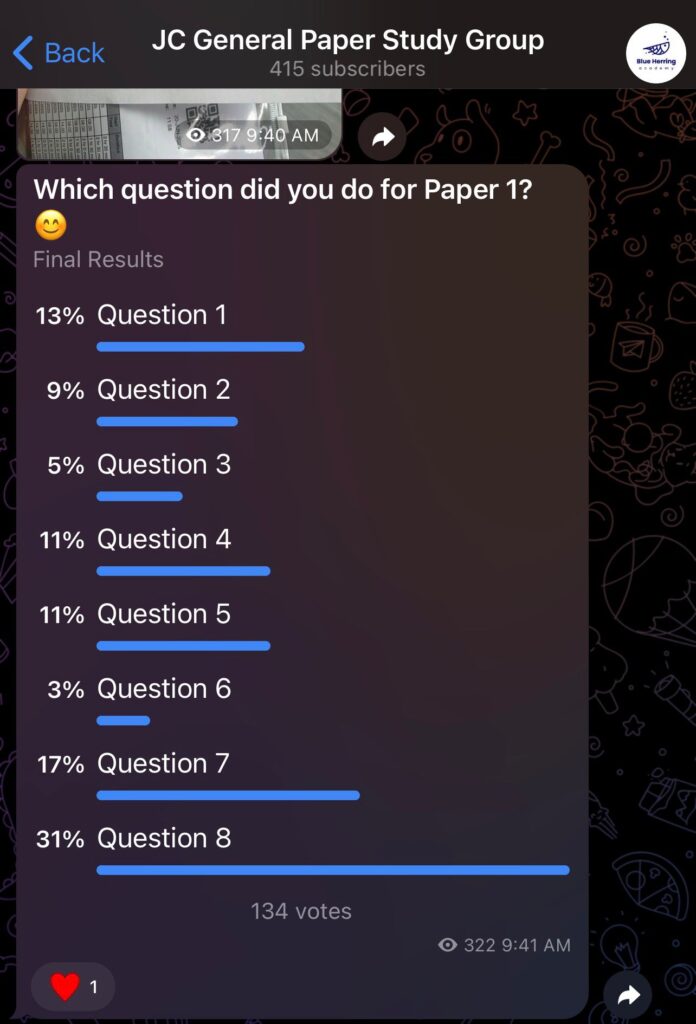
- Question 1 addresses the intersection of science and technology, environmental concerns, and economic progress. It closely resembles questions I have previously covered with my students, such as “Environmental concerns and economic growth cannot co-exist.” (GCE 2011). Students who had revised thoroughly would have readily recognised the key arguments and frameworks relevant to this topic.
- Question 4 focuses on a topic I had discussed with students just before the national examinations. We examined the merits of heroes and celebrities in depth and completed two Paper 2 practice exercises on this theme, allowing students to approach the question with confidence and clarity.
- Question 7 focuses on education and, unsurprisingly, was a popular choice among students (*2nd most popular as seen on image above). This mirrors last year’s trend, where the education-related question was also the most commonly attempted.
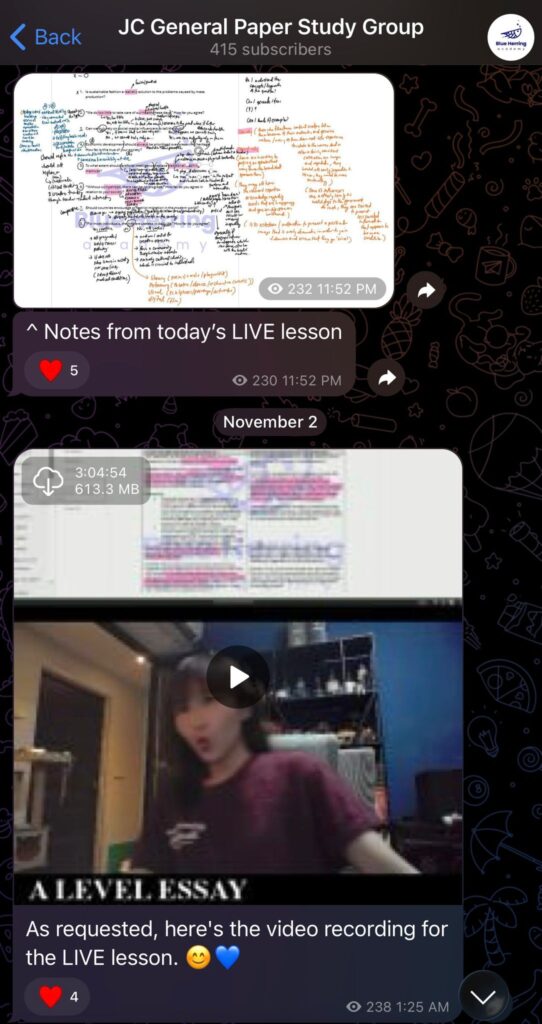
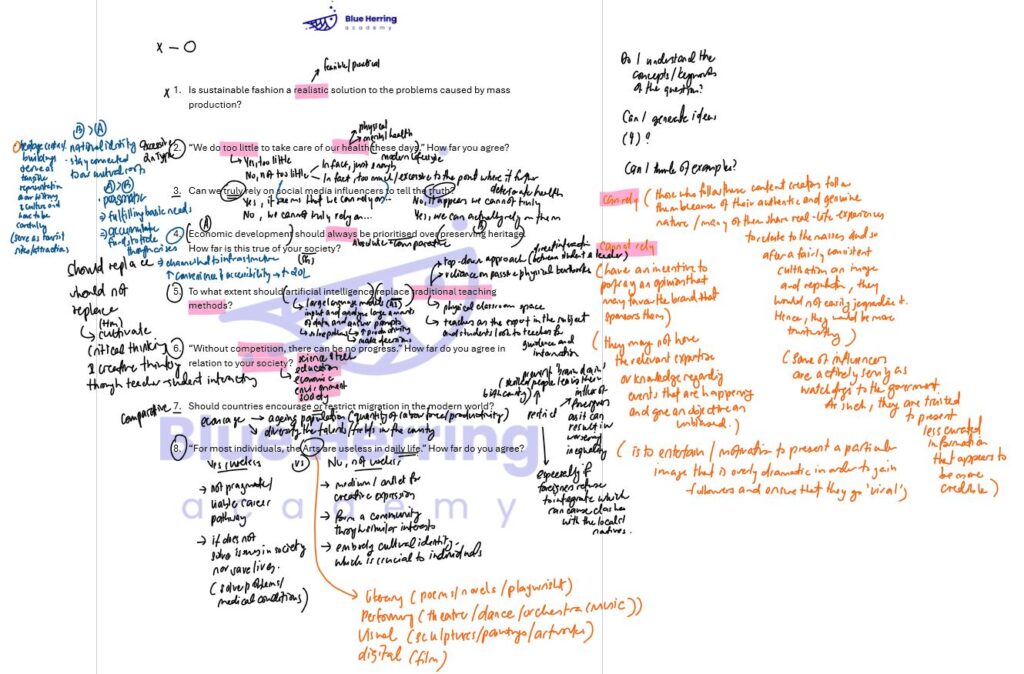
- Question 8 centres on governance and public health—an area I had specifically highlighted as a potential exam topic. Additionally, the stand ‘not enough’ prompts students to consider three possible stands to respond to the essay: ‘enough’, ‘not enough – in fact, too little’ and ‘not enough – in fact, too much’. Some students went the extra mile by writing additional essays for submission and detailed feedback prior to the examinations. I have also conducted a TikTok LIVE lesson a few days prior to the national examinations and pointed out that this could be a possible topic (*see images below). Needless to say, my students this year were well-prepared and truly fortunate.
—
Final comments:
Overall, the GCE 2025 Paper 1 essay questions were noticeably more manageable than those in last year’s paper. The topics tested were familiar and accessible, allowing well-prepared students to respond effectively. While I had anticipated that Artificial Intelligence (AI) might appear explicitly, it featured in Paper 2 rather than Paper 1. That said, AI-related examples could still be meaningfully integrated into several Paper 1 questions, particularly those addressing technological innovation and its impact on real-world issues, learning, and public perception (Questions 1, 4, and 7).
While building content knowledge is important, skills and techniques to make effective and sound arguments are important as well – and perhaps in the most critical period, crucial to scoring well.
—
Relevant Links:
Join BHA JC Telegram Group Chat for FREE! Link here >> https://t.me/+pSpCC_r7kvwyYWVl
Check out the post below regarding updated syllabus for the GCE A-Levels General Paper exam.